

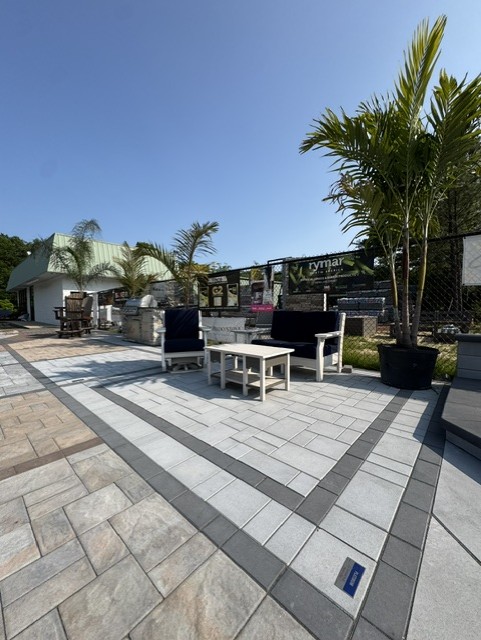
A patio that’s used only occasionally can get away with almost any surface.
One that hosts summer parties, kids running through, outdoor furniture, a grill, and daily family traffic needs more.
High-traffic patio paving materials must handle weight, spills, sand tracked in from the beach, and the freeze-thaw cycles common in Ocean County without shifting or looking worn after a couple of seasons.
The right choice depends on how space is actually used. Concrete pavers, natural stone, and certain crushed-stone options each perform differently under heavy foot traffic, furniture legs, and the occasional dropped toy or spilled drink.
The base underneath matters as much as the surface you see.
What Heavy Use Actually Does to a Patio
Kids playing, guests standing in groups, and patio furniture being moved all concentrate weight in small areas. Spills and tracked-in sand create staining and abrasion.
Over a full summer of use, a surface that is only marginally stable can develop low spots or shifting units.
In Ocean County, the combination of sandy soils and coastal weather adds another layer. A surface that looks fine in a low-traffic yard can settle or heave once it sees regular family use.
That is why the material and the supporting layers both need to be chosen for the actual load the patio will carry.
Concrete Pavers for High-Traffic Patios
Interlocking concrete pavers is one of the more practical options for a patio that sees regular use.
The units are consistent in thickness and size, so they distribute weight evenly when the base is prepared correctly. Individual pieces can be lifted and reset if something settles later, which is useful on a family patio where a grill or table might need to move.
Many homeowners choose them because the look can mimic stone or brick while the units themselves stay uniform.
At Cedar Bridge Landscape Supply, the Cambridge Paving Stones range is stocked as an authorized dealer. You can compare design kits and slab sizes on the Cambridge pavers and hardscape materials.
The consistent thickness helps when furniture and foot traffic are concentrated in the same areas all summer.
Natural Stone Under Heavy Use
Natural stones such as bluestones or flagstones offer variation in color and texture that many people prefer for a more organic patio. Dense stones hold up well under foot traffic when they are thick enough and set on a stable base.
Softer or more porous stones can show wear faster when they are constantly walked on, especially if sand and moisture are present.
The tradeoff is usually consistency and ease of repair. Natural stone pieces vary more in thickness and shape than manufactured pavers, so a high-traffic patio needs careful selection and a solid base.
For a practical side-by-side look at how the two materials differ under real use, see the comparison of natural stone vs. concrete pavers.
Crushed Stone and Aggregate Surfaces
Crushed stone or a compacted aggregate can work for secondary seating areas or paths that see moderate traffic. Angular stone locks together better than rounded gravel, which helps it stay in place underfoot. It drains well and is relatively easy to refresh if it shifts.
For a main patio that holds furniture, a grill, and frequent parties, loose or lightly compacted aggregate is usually less stable than interlocking pavers or a well-set stone surface. It can migrate under chair legs or become uneven where kids run.
Bulk options for base layers or secondary areas are stocked in bulk stone, sand, and base materials.
Why the Base Matters More on a High-Traffic Patio
A surface that sees daily use and concentrated loads will show any weakness in the base faster than a lightly used patio.
Angular crushed stone for the structural layer and concrete sand for the bedding layer under pavers are the combination most often used to keep the unit’s level. Concrete sand is a course, washed material that lets pavers seat without trapping water.
You can review the product details for concrete sand for paver bedding. The paver base essentials guide covers how these layers perform in sandy Jersey Shore soils.
Standards from the Interlocking Concrete Pavement Institute (ICPI) also address base preparation for interlocking systems that will carry regular traffic.
Matching the Surface to How You Use the Patio
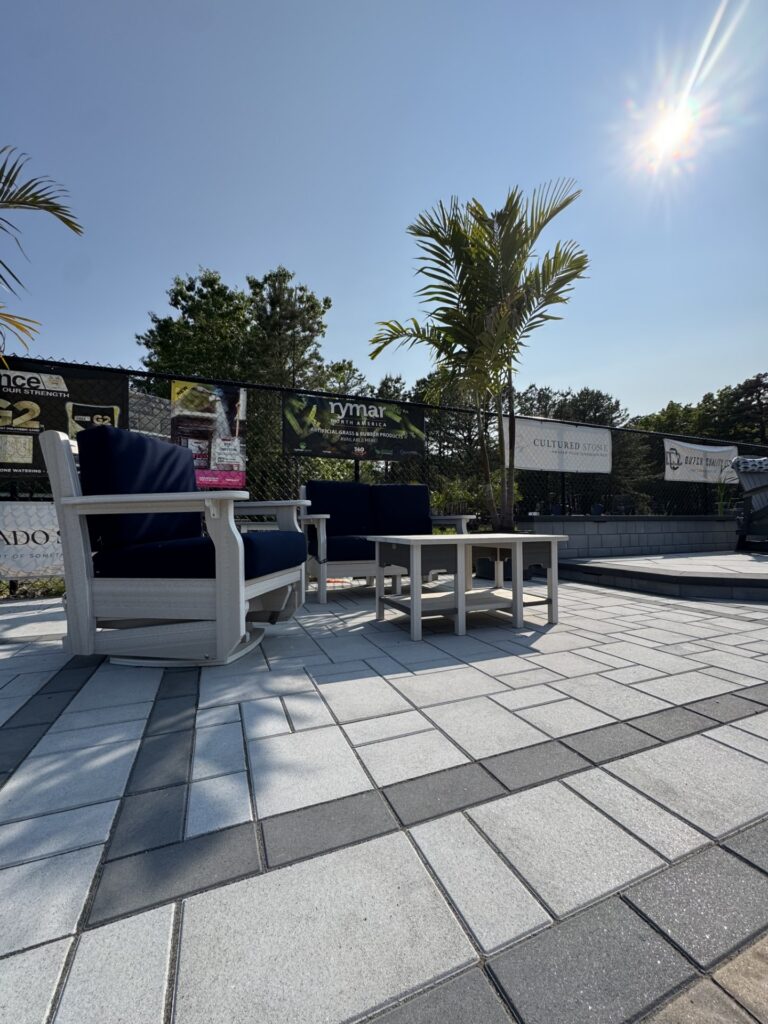
Start with the actual use. A patio that will hold a dining set, a grill, and regular gatherings usually benefit from interlocking concrete pavers or a dense natural stone set on a solid base. A secondary play area or path can often use a compacted aggregate if edge restraint is in place.
Then consider maintenance. Manufactured pavers are easier to lift and reset if one area settles. Natural stone offers more variation but can be harder to match if a piece needs replacement later. Aggregate is simpler to refresh but less stable under furniture and heavy foot traffic.
The best patio pavers overview looks at common options and how they perform in New Jersey conditions. Seeing the materials in person still removes most of the guesswork, especially when you can compare thickness, texture, and how the units will sit under a chair or table.
Seeing the Materials Before You Decide
Photos don’t show how a surface feels underfoot or how paver thickness compares to the weight of outdoor furniture.
At Cedar Bridge Landscape Supply, you can stand next to Cambridge design kits, natural stone samples, and the bulk aggregates used for base layers. The team sees these materials go into family patios every season and can point out which options hold up under the combination of kids, parties, and coastal weather.
Bring a photo of the space or a rough measurement if you have one. That makes it easier to talk through which surface fits your traffic pattern and which base materials match Ocean County’s sandy soils. Most people leave with a clearer plan than they arrived with, because the actual materials and the local experience are both in one place.
Stop by the yard at 309 Route 72 in Barnegat to compare the options, or request a quote so the team can pull together material recommendations for your project. The earlier you look at the surfaces and base materials, the easier it is to choose something that will hold up through summer parties and daily use.
Frequently Asked Questions
What patio material holds best for kids and parties?
Interlocking concrete pavers is often the most practical choice for high-traffic family patios because the units are consistent and can be reset if needed. Dense natural stone also performs well when it is thick enough and set on a solid base. The right answer depends on the specific traffic and the base underneath.
Does the base matter more on a heavily used patio?
Yes. Concentrated loads from furniture and foot traffic show base problems faster. A compacted crushed-stone layer and concrete sand bedding are commonly used under pavers, so the surface stays level. The paver base essentials guide covers how these layers work in local sandy soils.
Can I use gravel for a high-traffic patio?
Angular crushed stone can work for secondary areas or paths, but it is usually less stable under furniture and heavy foot traffic than interlocking pavers or well-set stone. Bulk aggregates are available for base layers or lower-traffic zones.
Where can I compare these materials in Ocean County?
Cedar Bridge Landscape Supply in Barnegat stocks Cambridge concrete pavers, natural stone options, and the bulk materials used for base layers. Visiting the yard lets you compare thickness, texture, and how the surfaces will perform under regular family use.
