

If you live near the water, your outdoor space has to do more than look good. A patio or walkway at the Jersey Shore needs to handle salt air, shifting moisture, sandy conditions, and seasonal weather changes without losing its appeal.
That’s why coastal hardscaping takes a little more thought. The best results come from choosing materials, colors, and layouts that fit both the style of your home and the demands of the environment.
At Cedar Bridge Landscape Supply, we help homeowners, contractors, and DIYers throughout Barnegat, New Jersey, and the Jersey Shore compare hardscaping materials that work well in coastal settings. If you’re planning a patio, walkway, or complete outdoor living space, here are some design ideas to consider before you begin.
Start with Materials That Make Sense for the Coast
Coastal design is not only about appearance. It starts with choosing materials that can hold up in a shoreline environment.
Salt, sand, moisture, and freeze-thaw cycles can degrade surfaces over time, especially if the wrong products are used. This is one reason why many homeowners opt for durable pavers like Cambridge Pavers when planning outdoor spaces near the shore.
If you live close to the water, it’s also a good idea to check out the best pavers for salt and sand before you make up your mind. The right material starting point makes the rest of the design much stronger.
Choose a Coastal Color Palette That Feels Natural
One of the easiest ways to create a coastal look is through color.
Soft neutrals work especially well
Lighter tones often feel most at home in coastal landscapes. Shades inspired by sand, weathered wood, shells, and driftwood can help a patio or walkway feel connected to the surrounding environment.
Popular coastal-friendly tones often include:
- soft gray
- warm beige
- taupe
- blue-gray
- off-white
- muted stone blends
These colors tend to work especially well with white trim, cedar accents, light siding, and the relaxed style common in many Jersey Shore homes.
Use contrast carefully
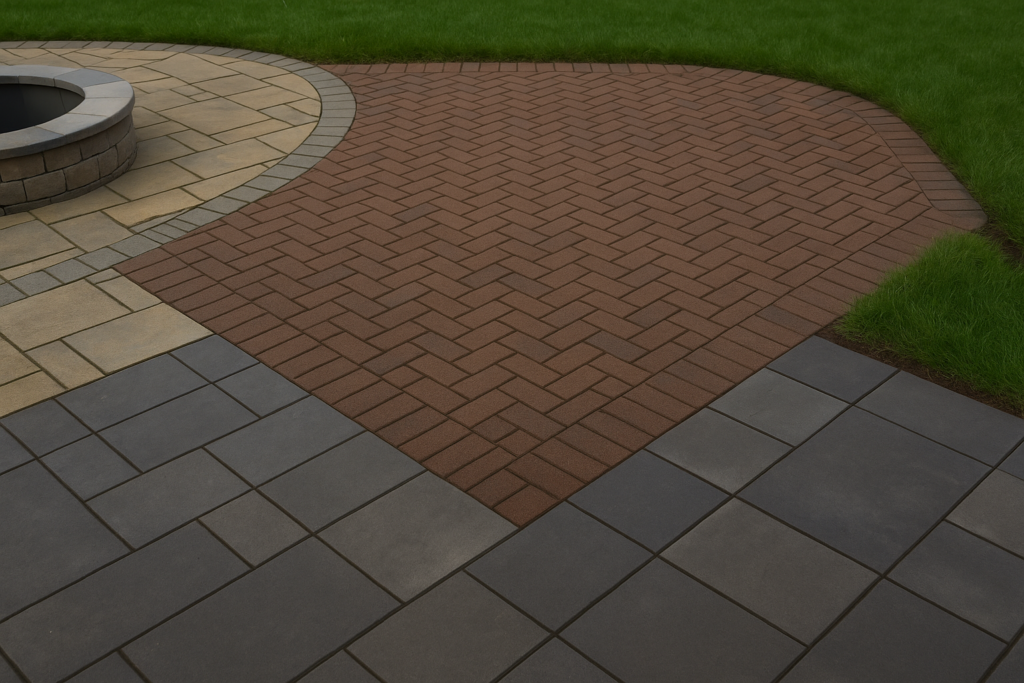
Coastal design does not have to mean everything is pale. A darker border or accent band can help define the space without making it feel heavy. The key is balance. A walkway or patio should feel clean, open, and natural rather than overly busy.
Keep the Layout Open and Easy to Move Through
A good coastal patio should feel relaxed and easy to use.
Create room for gathering
If the patio will be used for entertaining, keep the layout open enough for seating, dining, and movement. Clean lines and simple layouts often work best in coastal settings because they feel less crowded and let the surrounding landscape do some of the visual work.
Let walkways feel natural
Walkways should guide movement without feeling forced. Straight paths can work well for formal entries, but curved or gently shifting lines often feel better in backyard spaces, especially when they connect gardens, seating areas, or poolside features.
Think about how the space connects
One of the most useful design questions is not just “How will this patio look? But how will people move through it? “That is especially important if the walkway connects the driveway, backyard, outdoor shower, pool area, or side entry.
Use Borders and Patterns Without Overcomplicating the Design
Patterns and borders can add a lot, but coastal design usually works best when the details stay controlled.
A subtle border can define the space
Adding a border in a slightly darker or contrasting tone can frame a patio or walkway and give it a more finished look. This works especially well in open backyards where the hardscape needs just enough structure to stand out without overwhelming the space.
Keep patterns simple
Busy patterns can fight against the calm, open feel that most homeowners want in a coastal setting. Clean laying patterns and modest variation usually feel more timeless.
If you’re comparing paver styles, it may also help to read about why homeowners choose Cambridge Pavers when they want a balance of appearance, durability, and design flexibility.
Add Features That Support the Coastal Lifestyle
A patio should not only look right. It should work well for the way you actually use the space.
Consider built-in gathering features
If you host often, built-in seating, fire features, or low walls can help define a coastal patio without making it feel cluttered. These kinds of additions work especially well in larger outdoor living spaces where you want the layout to feel intentional.
Plan for low-maintenance landscaping around the hardscape
Hardscaping looks best when it is supported by simple, well-chosen plantings. In coastal settings, ornamental grasses, lavender, and other shoreline-friendly plantings often work well alongside patios and walkways.
Think about lighting early
Low-profile lighting can make walkways safer and patios more inviting in the evening. It is often easier to plan for lighting before installation than to retrofit it later.
Choose Materials That Work for Walkways as Well as Patios
Patios and walkways may be part of the same outdoor project, but they do not always need to be treated exactly the same.
Patios often carry the visual focus
Patios usually anchor the space, so that is where homeowners often invest the most attention in color, pattern, and layout.
Walkways should support flow and curb appeal
Walkways need to feel connected to the home and landscape. They should also hold up well to repeated traffic, shifting weather, and day-to-day use. The best walkway designs feel intentional without drawing attention away from the rest of the yard.
If you are comparing different hardscape options more broadly, it can also help to review best patio pavers for New Jersey backyards before locking in a final direction.
Don’t Overlook Coastal Performance
It is easy to focus on appearance first, but performance is what protects the investment long term.
Salt and moisture matter
Near the coast, surfaces deal with more than sun and foot traffic. Salt exposure, moisture, and seasonal storms all play a role in how materials age over time.
A strong base matters just as much as the surface
Even the best pavers will not perform well if the base is not built correctly. Drainage, compaction, and site prep all matter, especially in parts of Ocean County where sandy soil conditions can affect stability. If that is part of your project, our guide to the best paver base for sandy soil is worth reviewing.
Material choice should match the property
Every home near the coast is a little different. The best choice depends on sun exposure, traffic, layout, drainage, and how close the property is to salt-heavy conditions.
Questions Homeowners Ask About Coastal Patios and Walkways
What colors work best for a coastal patio?
Soft neutrals usually work best. Beige, gray, blue-gray, sand tones, and weathered stone shades tend to fit naturally with coastal homes and outdoor spaces.
Are Cambridge Pavers a good choice near the Jersey Shore?
They can be a strong option for coastal projects because they are built for durability and offer styles that work well with Jersey Shore homes. The right product still depends on the project, layout, and conditions at the property.
What is the best patio layout for a coastal backyard?
In many cases, open layouts work best. Patios that allow easy movement, natural gathering, and a clear connection to the rest of the yard usually feel most comfortable in coastal settings.
Should a coastal walkway be straight or curved?
It depends on the space. Straight walkways often suit formal entries, while curved or gently shifting paths tend to feel more natural in backyards and garden areas.
What materials hold up best to salt and sand?
That depends on the specific product, but durable paver systems designed for coastal conditions are often a smart place to start. It helps to compare materials before choosing based on looks alone.
How do I make a patio feel coastal without overdoing it?
Start with color, texture, and layout. Soft tones, simple borders, natural plantings, and clean lines usually create a stronger coastal look than adding too many themed details.
Start Your Coastal Project With Confidence
A coastal patio or walkway should feel like a natural extension of your home. It should look right, hold up well, and make outdoor living easier to enjoy season after season.
At Cedar Bridge Landscape Supply, we help homeowners and contractors throughout Barnegat, NJ, and the Jersey Shore choose hardscaping materials that fit both the property and the way the space will be used. Whether you are planning a new patio, improving a walkway, or designing a larger outdoor living area, our team is here to help you make a smart choice from the start.
Start here.
- Explore our Hardscaping Materials
- Compare the best pavers for salt and sand
- Learn more about Cambridge Pavers
- Request a Quote for your patio or walkway project
If you’d like help comparing colors, styles, and materials in person, Cedar Bridge Landscape Supply is ready to help you take the next step.
