


Paving Materials 101: The Complete Beginner’s Guide to Choosing the Right Surface for Your Project
Most people know they want a new patio, walkway, driveway edge, or pool to surround. They are less sure which surface to use. A paving materials guide like this one walks through the practical differences between the main options, so the choice is clearer before you visit a supply yard or talk to a contractor.
The surface you see is only part of the decision. Concrete pavers, natural stone, crushed stone, and gravel each behave differently under foot traffic, weather, and the sandy soils common along the Jersey Shore.
The surface remains at level for a time that is often determined by the base and bedding layers, the materials beneath them.
What Are the Main Types of Paving Materials?
Hardscape materials fall into a few practical groups. Each has strengths for different jobs in Ocean County. The main surface options and the base materials that support them are both stocked in the yard.
Concrete Pavers
Concrete pavers are manufactured in consistent sizes and come in a wide range of colors, textures, and styles. Many recreate the look of brick or natural stone while offering a more uniform thickness. If one becomes stained or damaged, it can usually be replaced without redoing the entire surface.
That combination of flexibility and consistency makes concrete pavers a popular choice for patios and walkways. Cedar Bridge Landscape Supply is an authorized Cambridge Paving Stones dealer, with design kits, slabs, and other hardscape options available to view on the Cambridge pavers and hardscape materials.
Their uniform sizing also makes it easier to create clean edges and orderly patterns.
Natural Stone
Natural stone includes options such as bluestone, flagstone, and other quarried materials cut or shaped for outdoor use. Each piece has a natural color variation and texture. The look is less uniform than manufactured pavers, which some homeowners prefer for a more organic appearance.
Stone can be used for patios, walkways, and accents. Performance depends on the specific stone type, how it is installed, and local conditions. Softer or more porous stones may need more care in a coastal climate than denser ones.
For a side-by-side look at the practical differences, see the comparison of natural stone vs. concrete pavers.
Crushed Stone and Gravel
Crushed stone and gravel create permeable or loose surfaces for paths, driveways, and decorative areas. Angular crushed stone locks together better than rounded gravel when compacted. Common sizes include larger base stone, ¾-inch material, and finer mixes such as dense graded aggregate (DGA).
Permeable-Style Surfaces
Some paving systems and open-graded aggregates allow water to pass through rather than run off. Permeable pavers and certain crushed-stone setups are used where reducing runoff is a goal. These still require a properly prepared base, so the surface does not settle unevenly. The same hardscaping and bulk materials pages cover the surface and base options that support permeable installations.
Why the Base and Bedding Materials Matter
The visible surface sits on layers that distribute weight and manage water. In sandy Jersey Shore soils, a stable base is especially important. Typical supporting materials include angular crushed stone for the structural layer and concrete sand for the bedding layer under pavers.
Concrete sand is a course; washed sand is used as the leveling bedding under pavers. It allows the units to seat while still draining.
You can see the product details for concrete sand for paver bedding. Joint sand—sometimes polymeric—fills the gaps between pavers after they are placed. The exact combination depends on the surface type, expected use, and site conditions.
For more on how base materials perform in local sandy soils, the paver base essentials guide covers the practical differences between crushed stone and sand layers. Standards from the Interlocking Concrete Pavement Institute (ICPI) also address base preparation and aggregate specifications for interlocking systems.
Following appropriate base practices is one of the main factors that keeps a surface level over time.
Choosing Materials for Ocean County Conditions
Ocean County projects face salt air, freeze-thaw cycles, and variable soils that range from sandy to heavier. Materials that hold up under these conditions are usually preferred.
Concrete pavers with durable finishes are widely used for patios and walkways. Natural stone choices that are denser tend to resist moisture better than softer varieties. Crushed stone and gravel handle drainage well when the base is prepared correctly.
Local experience at the supply yard helps match a material to a specific site rather than relying on a general recommendation.
The hardscaping inventory and the bulk materials yard both reflect what holds up on the Shore.
How to Narrow Your Options
Start with how the surface will be used. A main patio or walkway that sees regular foot traffic usually calls for a more stable, interlocking, or tightly fitted surface. A secondary path or decorative area can often use crushed stone or gravel. Driveway edges or vehicle areas need materials and base depths suited to weight.
Next, consider maintenance and appearance. Manufactured pavers offer more consistent color and easier piece replacement. Natural stones provide variation. Lose aggregates are simpler to refresh but can shift if not contained.
The natural stone vs. concrete paver comparison walks through those trade-offs in more detail.
Finally, factor in the supporting materials. The same surface can perform differently depending on the base and bedding chosen for the soil and drainage on the property. Seeing samples and talking through the project with the yard team clarifies what is practical for a given job.
If you are comparing sand types for the bedding or joint layer, the concrete sand vs. mason sand article covers the differences that matter for paver work.
Seeing the Materials in Person
Photos and descriptions only go so far. Concrete pavers, natural stone, and bulk aggregates to look and feel different once you stand next to them.
A Cambridge paver that looks gray online may show subtle color variation in daylight. A piece of flagstone that seems flat in a picture may have more texture underfoot. Crushed stone that appears uniform in a bag can pack and drain differently depending on the size and shape.
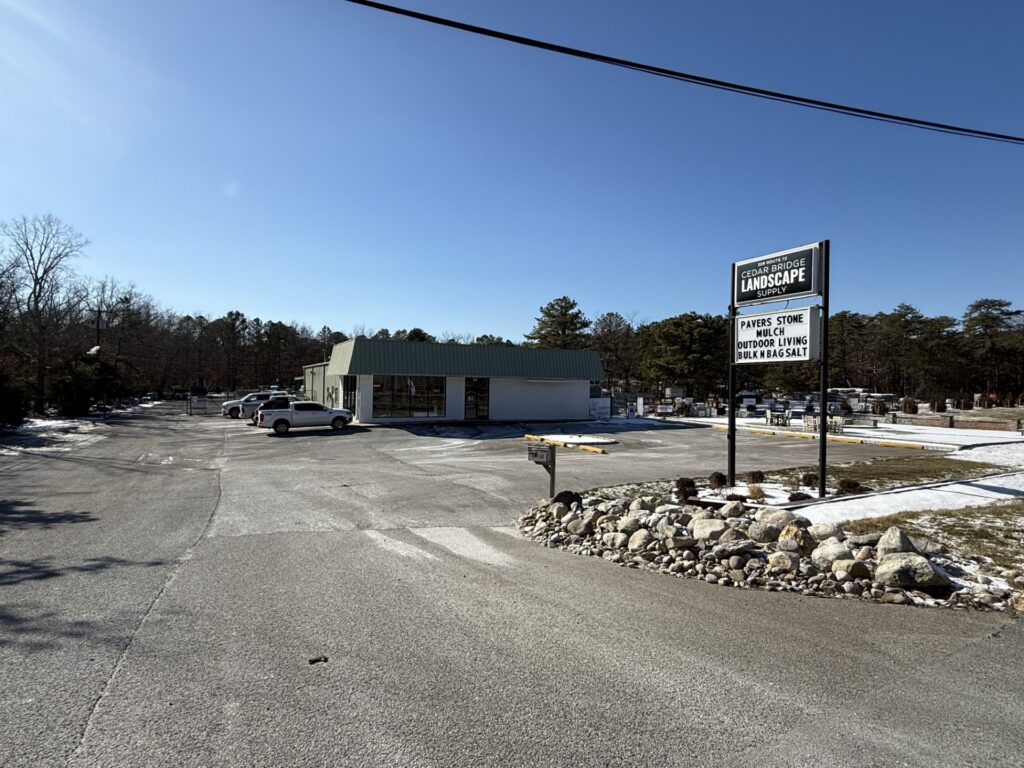
At Cedar Bridge Landscape Supply, our showroom in Barnegat lets you compare textures, colors, and sizes side by side. You can see how a design kit lays out, check the thickness of a slab, and ask which base materials local contractors use on sandy lots in Ocean County.
The team has walked through these same choices with homeowners and landscapers every season, so the conversation tends to move quickly from general options to what fits your specific project.
Bring along a rough measurement of the area if you have it. Even a photo of the space on the phone helps. From there, staff can guide you on which Cambridge styles wear well on the Shore, what natural stone choices are realistic within your budget, and if bulk crushed stone or a full paver system is the best option for the job.
They can also walk through pickup vs delivery, so the material is there when and where you need it. Most people leave with a better plan than they came in with.
Seeing the actual materials eliminates the guesswork involved in ordering online or relying solely on a contractor’s recommendation. It also allows you to verify that the base and bedding material on hand in the yard are consistent.
Stop by our yard in Barnegat to compare the options in person, or request a quote so the team can pull together material recommendations and quantity guidance for your project. The earlier you look at the materials, the easier it is to lock in the right surface and base before the busy season fills up.
Frequently Asked Questions
What is the difference between concrete pavers and natural stones?
Concrete pavers are manufactured for consistent size and shape. Natural stones are quarried and show natural variation in color and texture. Both are used for patios and walkways; the choice often comes down to appearance, budget range, and how uniform the surface needs to look. The natural stone vs concrete pavers comparison covers this in more detail.
Do I need special materials under pavers in sandy soil?
Yes. A compacted crushed-stone base and a concrete-sand bedding layer are commonly used, so the surface stays level. The exact depths and materials depend on the site. The paver base essentials guide and the bulk materials inventory both address the options used on local sandy soils.
Can I use gravel instead of pavers for a walkway?
Yes, for many secondary paths. Angular crushed stone or a compacted aggregate mix works better than rounded gravel for stability. Edge restraint is still needed to keep the material in place. Bulk stone and aggregate options are available on the bulk materials page.
Where can I see paving materials in Ocean County?
Cedar Bridge Landscape Supply in Barnegat stocks Cambridge concrete pavers, natural stone options, and bulk aggregates. The hardscaping page shows the Cambridge range, and the bulk materials page covers the base stone and sand. Visiting the yard lets you compare samples and talk through base materials for your project.
